


EMS Foot Drop Recovery Mat
EMS Foot Drop Recovery Mat
Foot drop makes every step a trip hazard. EMS directly contracts the tibialis anterior muscle that nerve damage has silenced. 15 minutes a day, at home, same technology as clinical rehabilitation.
 EMS reactivates the tibialis anterior directly
 15-20 min/day, results visible in 12 days
 Portable, wireless, USB rechargeable
 For stroke, MS, Parkinson, nerve damage
Couldn't load pickup availability
In Stock, Ready to Ship in: 24/48 Hours

EMS Foot Drop Recovery Mat


60-Day Money-Back Guarantee
60-Day Money-Back Guarantee
Try the Lindalia EMS Foot Drop Recovery Mat for 60 days. If dorsiflexion does not improve, return it for a full refund. No questions asked.
How does EMS help foot drop specifically?
How does EMS help foot drop specifically?
Foot drop occurs when the nerve signal from the brain to the tibialis anterior muscle is damaged or blocked. EMS bypasses the damaged nerve pathway and electrically contracts the muscle directly. This repeated contraction retrains the neuromuscular connection and, over time, helps restore voluntary muscle activation. It is the same mechanism used in clinical functional electrical stimulation programs.
Is this safe for post-stroke patients?
Is this safe for post-stroke patients?
Yes, for most post-stroke patients. EMS-based foot drop rehabilitation is a standard physiotherapy approach. However, do not use if you have a pacemaker, implanted defibrillator, or active deep vein thrombosis in the leg. Check with your neurologist or physiotherapist before starting if you are in the acute recovery phase post-stroke.
How soon will there be improvement?
How soon will there be improvement?
Most users report improved dorsiflexion (the ability to lift the front of the foot) within 12 days of daily use. Initial changes are subtle, such as less dragging during walking. More significant functional improvement develops over 4 to 8 weeks of consistent daily sessions. Progress depends on the cause and severity of the nerve damage.
Can I use this for neuropathy without foot drop?
Can I use this for neuropathy without foot drop?
Yes. The EMS stimulation is effective for general lower leg muscle weakness from peripheral neuropathy, whether or not a clear foot drop pattern is present. Many users with diabetic neuropathy or chemotherapy-induced neuropathy use it to maintain muscle activation and improve circulation in the foot. Consult your doctor before use if you have active diabetic foot ulcers.
Delivery Times and Free Shipping
Delivery Times and Free Shipping
All orders include free shipping.
US delivery: 5 to 7 business days.
International: 7 to 14 business days.
Device specifications
Device specifications
- Technology: EMS (Electrical Muscle Stimulation)
- Target muscle: Tibialis anterior (dorsiflexion)
- Session duration: 15 to 20 minutes per day
- Power: USB rechargeable, wireless during use
- Maximum foot size: US 15 (EU 50)
- Expected initial results: 12 days
- For: foot drop, stroke recovery, MS, Parkinson's disease, peripheral neuropathy, lower leg muscle weakness
- Contraindication: pacemaker, implanted cardiac device, active DVT


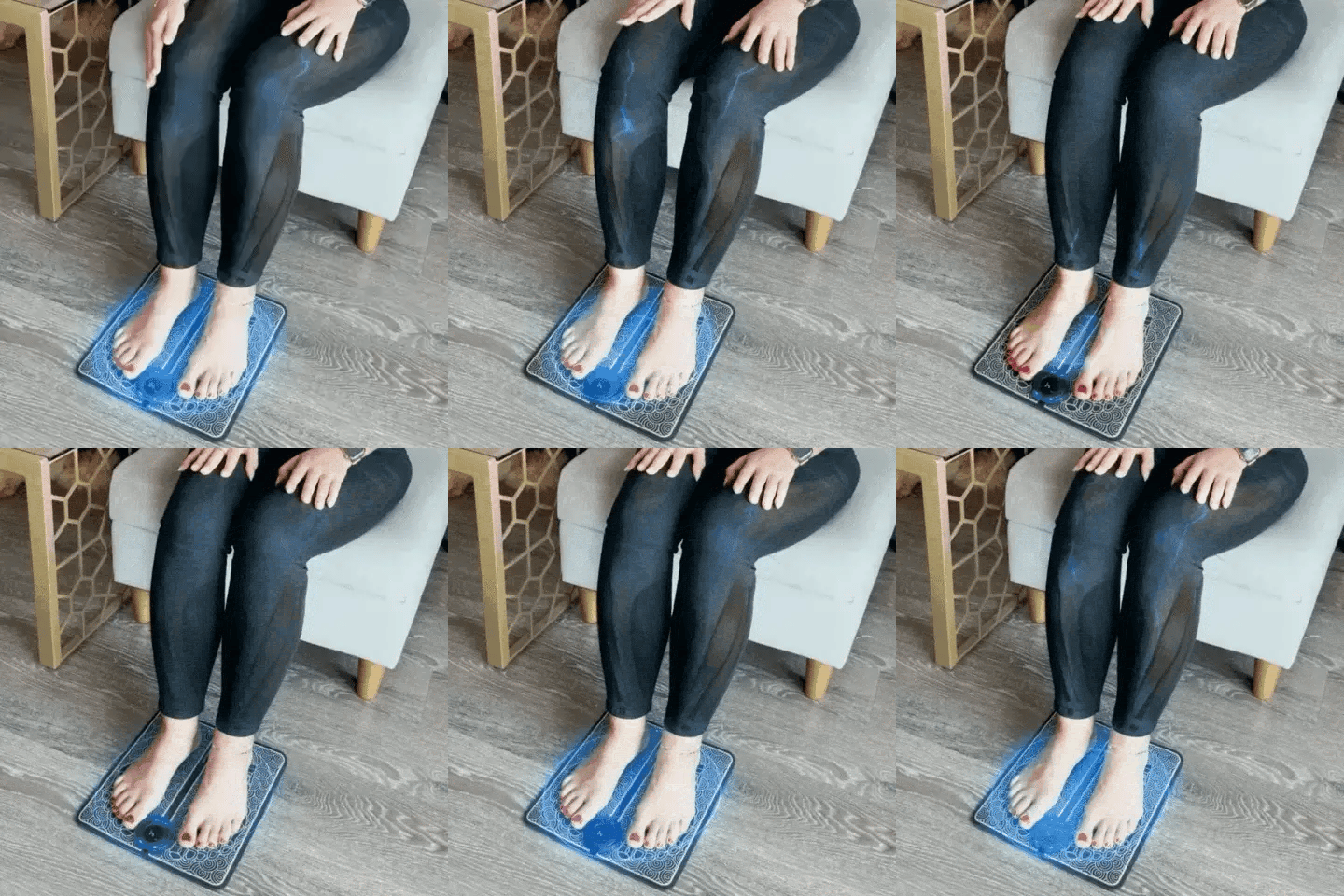
Same Technology as Clinical Rehab. At Home.
Same Technology as Clinical Rehab. At Home.
Same Technology as Clinical Rehab. At Home.
Same Technology as Clinical Rehab. At Home.
Same Technology as Clinical Rehab. At Home.
Same Technology as Clinical Rehab. At Home.
Same Technology as Clinical Rehab. At Home.
Same Technology as Clinical Rehab. At Home.
Same Technology as Clinical Rehab. At Home.
Same Technology as Clinical Rehab. At Home.
Same Technology as Clinical Rehab. At Home.
Same Technology as Clinical Rehab. At Home.
Same Technology as Clinical Rehab. At Home.
Same Technology as Clinical Rehab. At Home.
Same Technology as Clinical Rehab. At Home.
Same Technology as Clinical Rehab. At Home.
What rehabilitation users report
Results
89%
reported measurable improvement in foot lifting within 12 days of daily use
87%
said walking felt safer with less tripping or dragging by week 3
85%
used it alongside physiotherapy and reported faster functional recovery
85%
with peripheral neuropathy said foot sensation and strength improved
Based on customer feedback after consistent use.
Why EMS outperforms AFO braces alone
Discover why Lindalia is the #1 choice!

|
AFO Braces and Passive Foot Supports | |
|---|---|---|
| Directly contracts the dormant tibialis anterior | ||
| Retrains the neuromuscular connection over time | ||
| Portable home use, no clinic appointment | ||
| Works for stroke, MS, Parkinson, neuropathy | ||
| Results in 12 days, not months |
Why does a foot brace not fix foot drop?
An AFO brace holds the foot up mechanically. It does not stimulate the muscle or help the nerve connection recover. The tibialis anterior continues to atrophy while the brace compensates.
EMS directly contracts the muscle. Repeated daily stimulation maintains muscle mass and works toward restoring voluntary control.

Trustpilot reviews
Excellent 4.8 / 5
Frequently Asked Questions
How do I set the intensity correctly?
How do I set the intensity correctly?
Start on the lowest intensity setting and increase gradually over the first few sessions until you feel a clear muscle contraction in the front of the lower leg. You should see and feel the foot lifting slightly with each pulse. If you feel pain rather than contraction, reduce the intensity. The correct level produces visible dorsiflexion without discomfort.
Can I use it if I have metal plates in my leg?
Can I use it if I have metal plates in my leg?
Do not use EMS directly over a metal implant. The electrical current concentrates around metal and can cause discomfort or tissue damage at the implant site. If the implant is in the foot or ankle, avoid use in that area. Consult your surgeon before using EMS near any metal hardware.
Should I use it in addition to physiotherapy or instead of it?
Should I use it in addition to physiotherapy or instead of it?
In addition to, not instead of. This mat is a home supplement to your physiotherapy program. The daily stimulation between clinic sessions accelerates recovery by maintaining muscle activation frequency. Share the device with your physiotherapist so they can incorporate it into your overall rehabilitation plan.
Is there a risk of over-stimulating the muscle?
Is there a risk of over-stimulating the muscle?
The recommended 15 to 20 minutes per day is safe for the tibialis anterior. Longer sessions do not accelerate recovery and can cause muscle fatigue. Stick to one session per day. If the muscle feels sore the next day, take a rest day and reduce the intensity slightly.